

Project Overview
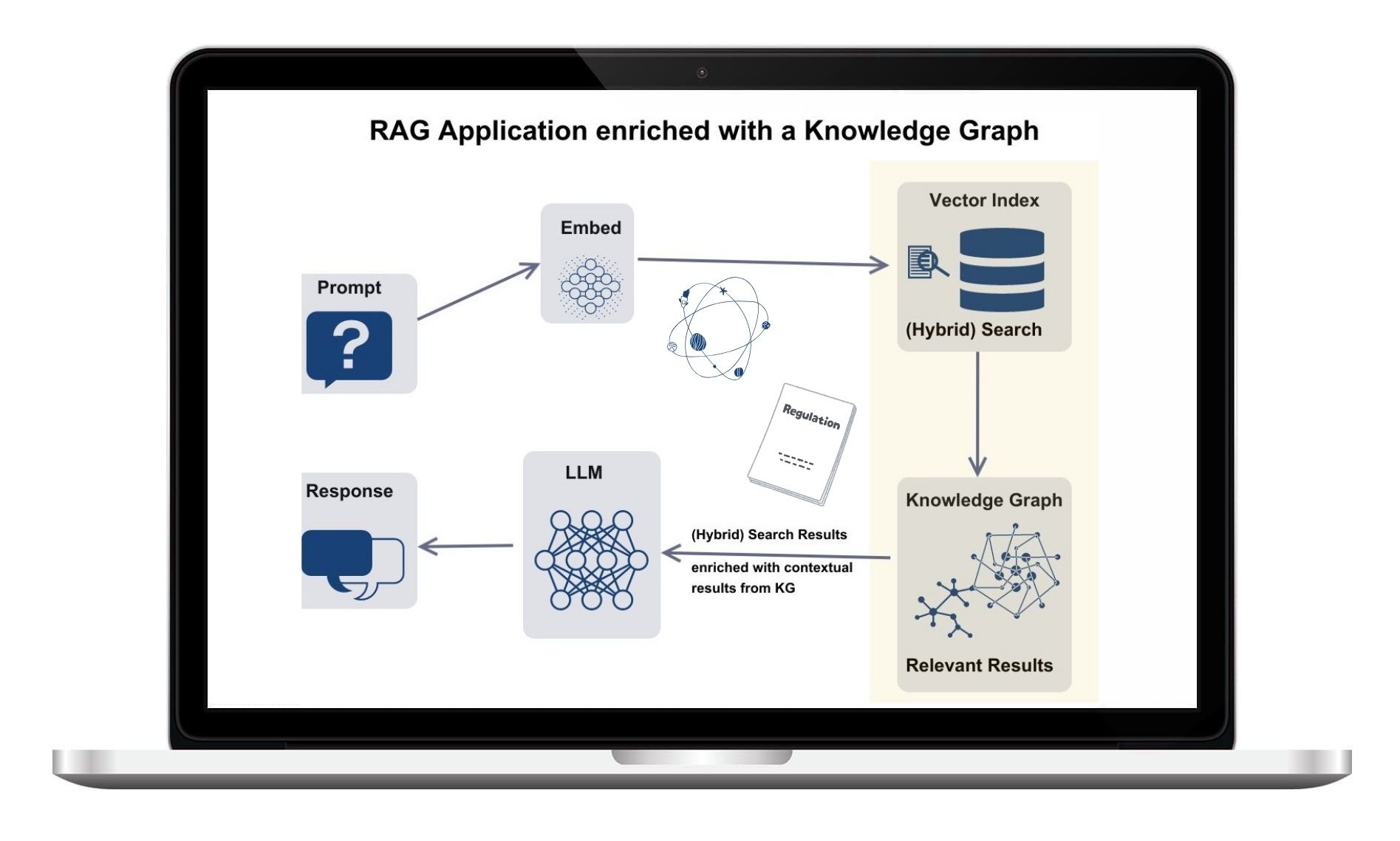
I designed a hybrid Graph-RAG architecture for retrieving and reasoning over European Cooperation for Space Standardization (ECSS) engineering documents.
Unlike conventional vector-based RAG, which primarily retrieves semantically similar text chunks, this system explicitly models the structural relationships and normative dependencies encoded in aerospace standards. This is particularly important for requirements containing cross-references and deontic constraints such as SHALL, SHOULD, and MAY.
Drawing on my background in Cognitive Neuroscience, I approached the standards as structured knowledge networks rather than collections of independent text passages.
System Architecture
The retrieval pipeline combines several advanced techniques. It uses ChromaDB + Hugging Face embeddings for Top-K semantic retrieval, while NetworkX represents the normative relationships between requirements. A deterministic Regex + NetworkX parser extracts nodes and edges directly from retrieved document chunks.
The system performs ego-graph traversal along CONTAINS and REFERENCES relationships to recover relevant structural context. Qwen2.5-7B-Instruct handles grounded response generation, where retrieved assertions are explicitly traced back to their lexical or graph-based source, providing an interpretable retrieval path rather than treating the context as an undifferentiated set of text chunks.
Engineering Results
I built and tested a dual-layer retrieval engine on a full ECSS corpus, automatically constructing a normative graph containing 1,935 nodes and 2,098 edges. The pipeline extracts the graph structure directly from document chunks without manual annotation, enabling the retrieval system to recover multi-hop dependencies between requirements.
Future Roadmap and Extensions
The architecture is designed as a foundation for progressively more scalable, multimodal, and autonomous compliance workflows.
Scalable Graph Infrastructure: migrate from the in-memory NetworkX topology to a persistent graph database such as Neo4j or Memgraph, enabling the integration of larger and cross-agency standards collections.
Multi-Modal RAG: extend the retrieval architecture to process flowcharts, decision trees, and compliance tables using Vision-Language Models and advanced document parsing tools such as LlamaParse or Unstructured.
Agentic Compliance Workflows: evolve the current single-prompt pipeline into a multi-step architecture using LangGraph or CrewAI, with specialized agents for retrieval, evidence verification, and compliance-gap analysis.
Automated Compliance Matrix Export: generate Requirements Traceability Matrices (RTM) and Verification Control Documents (VCD) directly from retrieved requirements, with export to .xlsx or .csv.
Advanced Entity Extraction: complement the current deterministic Regex parser with lightweight NLP models such as spaCy or GLiNER, enabling the graph to connect normative constraints to domain entities such as hardware components and software interfaces.
For a deep dive into my analytical process, the GitHub repository includes all the Jupyter Notebooks, preprocessing steps, and detailed statistical analyses conducted throughout the project.